

Healthy soil is the foundation of a productive vegetable garden. Proper soil preparation improves nutrient availability, enhances water retention, supports beneficial microbes, and promotes strong root growth. Whether you are planting in containers, raised beds, or backyard plots, preparing soil correctly can significantly improve vegetable yield and quality.
This guide explains practical and reliable steps to prepare soil for vegetables at home using simple methods suitable for beginners and experienced gardeners alike.
Why Soil Preparation Matters Before Planting Vegetables
Vegetables grow best in loose, nutrient-rich, and well-drained soil. Poor soil leads to weak plants, slow growth, pest issues, and lower harvests. Preparing soil improves:
- Root penetration
- Water absorption and drainage balance
- Nutrient availability
- Soil microbial activity
- Overall plant resistance to disease
Proper preparation ensures vegetables receive the support they need from the beginning of the growing season.
Choose the Right Location for Your Vegetable Soil Bed
Select an area that receives at least 6 to 8 hours of direct sunlight daily. Most vegetables require strong sunlight to grow efficiently.
The location should also have:
- Good drainage
- Easy access to water
- Protection from strong winds
- Enough space for plant spacing
Avoid areas where water collects after rainfall.
Remove Weeds, Stones, and Debris
Clear the planting area before improving the soil. Remove:
- Grass roots
- Plastic pieces
- Rocks
- Dry leaves
- Old plant residues
Weeds compete with vegetables for nutrients and moisture. Removing them early prevents future problems.
Test Soil Texture at Home
Understanding soil texture helps determine what improvements are required.
Take a handful of moist soil and press it in your palm:
- Sandy soil feels gritty and falls apart quickly
- Clay soil feels sticky and forms a tight ball
- Loamy soil feels soft and crumbly
Loamy soil is ideal for growing vegetables because it balances drainage and nutrient retention.
Loosen the Soil Properly
Loosening improves air circulation and root expansion.
Use a garden fork, spade, or hand cultivator to loosen soil up to 8 to 12 inches deep. Break compact layers and remove leftover roots.
Avoid working soil when it is too wet because it damages structure.
Add Organic Matter for Fertility
Organic matter is the most important ingredient for vegetable soil improvement. It increases fertility and improves soil structure naturally.
Mix the following materials into the top layer:
- Compost
- Well-rotted cow dung manure
- Vermicompost
- Leaf mold
- Kitchen vegetable waste compost
Add approximately 2 to 3 inches of compost evenly across the soil surface and mix thoroughly.
Improve Soil Drainage If Needed
Drainage problems reduce oxygen availability for roots.
If soil holds too much water, add:
- River sand
- Compost
- Coco peat
If soil drains too quickly, add:
- Compost
- Farmyard manure
- Leaf mold
These materials help maintain the correct moisture balance.
Adjust Soil pH for Better Vegetable Growth
Vegetables grow best in soil with a pH between 6.0 and 7.5.
To improve acidic soil:
- Add wood ash
- Add agricultural lime
To improve alkaline soil:
- Add compost
- Add organic manure
Balanced pH helps plants absorb nutrients efficiently.
Add Natural Fertilizers Before Planting
Before sowing seeds or transplanting seedlings, enrich soil with natural fertilizers.
Recommended options include:
- Vermicompost
- Bone meal
- Neem cake powder
- Mustard cake fertilizer
Mix fertilizers evenly into the soil for steady nutrient release.
Level the Soil Surface Properly
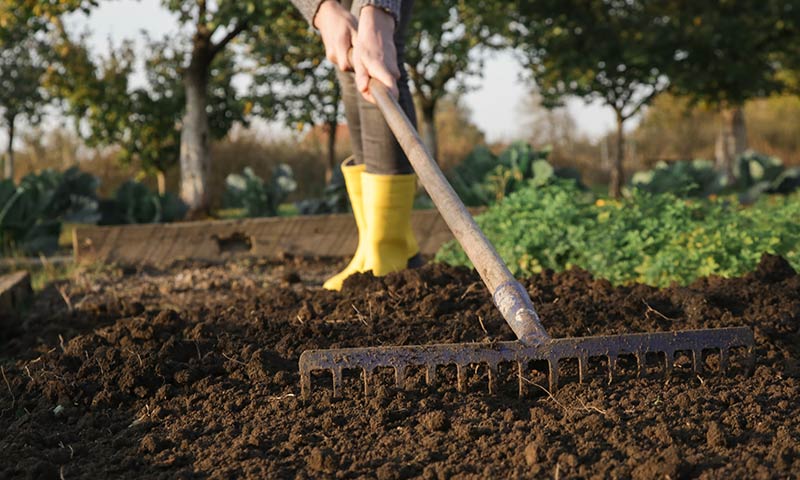
After mixing compost and fertilizers, level the soil surface using a rake or hand tool.
Leveling helps:
- Maintain uniform watering
- Prevent seed displacement
- Improve planting accuracy
Smooth soil also supports better root establishment.
Water the Soil Before Planting
Light watering settles soil particles and activates microbial activity.
Avoid overwatering. Soil should remain moist but not soggy before planting seeds.
Let the soil rest for one to two days before sowing vegetables.
Best Soil Mix for Container Vegetable Gardening
If growing vegetables in pots or grow bags, prepare a balanced soil mixture.
A reliable container soil mix includes:
- 40 percent garden soil
- 30 percent compost
- 20 percent coco peat
- 10 percent sand
This combination supports strong root development and proper drainage.
Common Mistakes to Avoid While Preparing Vegetable Soil
Avoiding common errors improves gardening success.
Do not:
- Use fresh manure directly
- Plant immediately after adding chemical fertilizers
- Ignore soil drainage problems
- Skip weed removal
- Overwater newly prepared soil
Correct preparation ensures healthier plants and higher productivity.
Signs That Your Soil Is Ready for Vegetable Planting
Prepared soil should show these characteristics:
- Dark and crumbly texture
- Earthy smell
- Good moisture retention
- Easy to dig surface
- No visible weeds
These indicators confirm the soil environment is suitable for planting vegetables.
FAQ Section
How long before planting should soil be prepared for vegetables
Preparing soil 7 to 14 days before planting allows organic matter to settle and microbial activity to stabilize, improving plant growth conditions.
Can vegetables grow in normal garden soil without preparation
Vegetables can grow in untreated soil but yields are usually lower because nutrients, drainage, and structure may not support healthy root development.
Is compost necessary for preparing vegetable soil at home
Compost is highly recommended because it improves soil fertility, structure, moisture retention, and beneficial microbial activity.
How often should soil be prepared for vegetable gardening
Soil should be refreshed with compost and organic matter before every planting season for consistent productivity.
Can kitchen waste compost be used for vegetable soil preparation
Yes, properly decomposed kitchen waste compost provides essential nutrients and improves soil texture for vegetable cultivation.
What thickness of compost layer is ideal before planting vegetables
A compost layer of 2 to 3 inches mixed into the topsoil is generally sufficient for most vegetable crops.
Should soil be watered immediately after adding compost
Yes, light watering helps compost integrate into the soil and supports microbial activation before planting begins.