

Creating an outdoor space that welcomes children while maintaining sophisticated aesthetics challenges many homeowners. The common assumption that kid-friendly yards must look chaotic or childish prevents families from achieving their design potential. In reality, thoughtful planning produces gardens that serve active play, support child development, and satisfy adult aesthetic preferences simultaneously.
Redefining Kid-Friendly Design
Traditional approaches to children’s outdoor spaces often prioritize bright primary colors, cartoon themes, and obvious play equipment. This dated thinking creates yards that feel temporary and visually jarring. Contemporary family garden design integrates play seamlessly into cohesive landscapes that appeal across age groups and maintain relevance as children grow.
The shift begins with material and color choices. Natural wood tones, powder-coated metals in sophisticated hues, and organic plantings create elegant backdrops that complement rather than clash with architectural styles. Play elements become intentional design features rather than afterthoughts tolerated for childhood’s duration.
Strategic Zoning for Function and Form
Successful family gardens divide space into distinct yet connected zones, each serving specific purposes while contributing to overall composition. Active play areas occupy durable zones with appropriate surfacing while quiet garden rooms offer respite and beauty. Visual transitions between zones use plantings, level changes, or subtle screening rather than harsh barriers.
Position high-activity zones away from windows and outdoor living spaces to minimize noise intrusion and wear visibility. Locate them where natural sight lines from inside the home allow supervision without constant proximity. This planning creates peaceful adult spaces while maintaining safe, engaging children’s areas.
Durable Plant Selections
Kid-friendly gardens need robust plantings that withstand errant balls, trampling, and occasional digging. Native grasses, established shrubs, and resilient groundcovers bounce back from abuse while requiring minimal care. Avoid delicate specimens in high-traffic zones, reserving them for protected garden beds beyond active play paths.
Ornamental grasses like fountain grass or switchgrass add movement and texture while tolerating considerable disturbance. Flowering perennials such as coneflowers and black-eyed Susans attract pollinators and provide cutting flowers while proving nearly indestructible. These workhorses deliver beauty without constant fussing.
Edible Landscaping Integration
Productive gardens serve multiple functions by providing fresh food, teaching botanical concepts, and creating hands-on learning opportunities. Raised beds containing herbs, vegetables, and berry bushes blend beautifully with ornamental plantings while engaging children in growth cycles and nutrition awareness.
Choose attractive edible varieties that contribute aesthetically. Rainbow chard, purple beans, and variegated sage offer visual interest beyond their harvest value. Fruit trees provide spring blooms, summer shade, and fall produce, justifying their space through seasonal progression.
Play Equipment as Design Elements
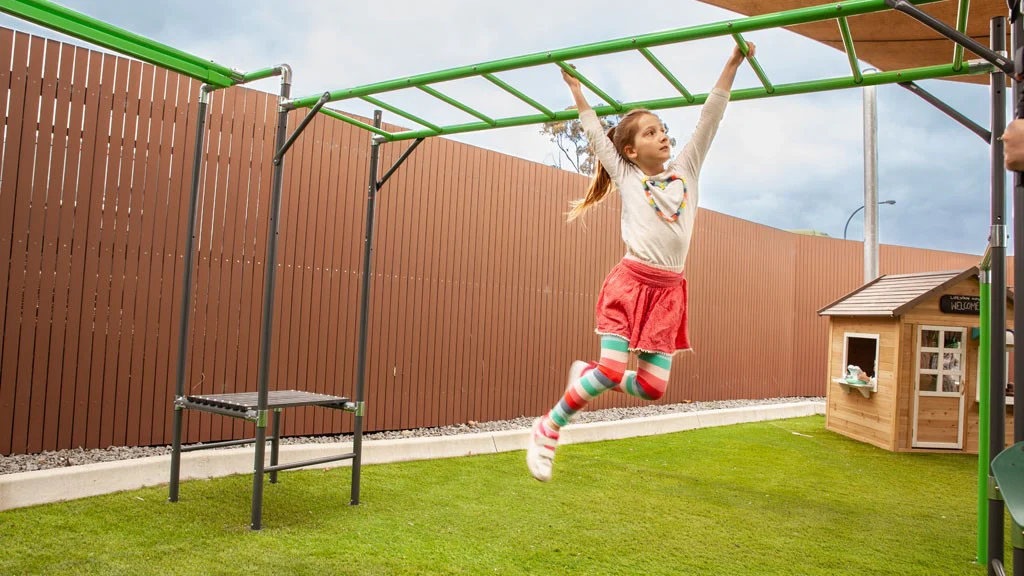
Rather than viewing play structures as necessary evils, treat them as sculptural features requiring the same design consideration as water features or specimen trees. Quality equipment in natural materials or sophisticated finishes enhances landscapes instead of detracting from them. Funky Monkey Bars in powder-coated steel with clean lines read as intentional architectural elements rather than temporary kid gear.
Scale matters tremendously. Oversized equipment overwhelms small yards while undersized pieces look lost in expansive landscapes. Proper proportioning ensures play structures feel integrated rather than imported. Surrounding plantings softens hard edges and creates gradual transitions between play zones and garden areas.
Surface Material Aesthetics
Safety surfacing doesn’t require sacrificing visual appeal. While basic rubber mulch serves functionally, upgraded options like poured rubber in custom colors, artificial turf, or decorative stone blends look intentional. These premium surfaces cost more initially but last longer and maintain appearance better than economy alternatives.
In garden beds adjacent to play areas, river rock or pea gravel creates clean borders that won’t scatter onto lawns or paths. These materials also facilitate drainage while providing attractive texture contrasts against plantings. Avoid dyed mulches in unnatural colors that cheapen overall aesthetics.
Incorporating Water Thoughtfully
Water features fascinate children while adding sensory richness to gardens. Pondless fountains eliminate drowning hazards while creating soothing sounds and wildlife habitats. Splash pads and spray features provide summer cooling without permanent pool commitments. Design these elements with surrounding landscapes in mind, using natural stone borders and native plantings for integration.
Seasonal water play equipment that stores away prevents visual clutter during off-months. Simple sprinklers attached to decorative posts or sculpture bases provide function when needed while maintaining garden appearance when inactive.
Multi-Generational Seating
Comfortable seating encourages outdoor time for all family members while defining garden rooms. Built-in benches, movable lounge chairs, and dining sets serve adult relaxation and supervision needs. Smaller seats or tree stumps scattered through play zones accommodate children without formal furniture’s visual weight.
Seating placement considers sun angles, shade availability, and sight lines to play areas. Morning coffee spots face east to catch sunrise while evening gathering spaces orient toward western views. This intentional positioning maximizes enjoyment throughout the day.
Lighting Layers
Thoughtful illumination extends garden use while creating nighttime ambiance. Path lighting ensures safe navigation after dark while accent lights highlight specimen trees and architectural features. Play areas need sufficient visibility for evening activities without harsh floodlighting that destroys atmosphere.
Solar options reduce installation costs and eliminate wiring concerns. Quality solar lights now provide reliable illumination comparable to wired fixtures. String lights add festive warmth to dining areas while maintaining sophisticated restraint.
Storage Solutions Hidden in Plain Sight
Outdoor toy storage plagues many family yards, creating visual chaos that undermines design efforts. Custom storage benches, decorative sheds matching home architecture, and built-in deck boxes conceal equipment while contributing functional seating or garden features. Strategic evergreen screens hide larger storage areas from main sight lines.
Dedicated storage encourages cleanup routines that maintain garden appearance. When everything has a designated home, children can manage their own equipment more successfully, reducing parental frustration and landscape mess.
Seasonal Interest Throughout the Year
Gardens serving families need year-round appeal since children play outdoors in all seasons. Spring bulbs and flowering trees provide early color, summer perennials sustain blooms, fall foliage offers warmth, and winter evergreens maintain structure. This progression creates constantly evolving backdrops for childhood memories.
Deciduous trees provide summer shade over play equipment while allowing winter sun to warm active areas during cold months. This passive climate control increases comfortable outdoor time without mechanical intervention.
Flexible Design for Changing Needs
Family gardens must evolve as children grow and interests shift. Sandbox areas convert to raised beds, toddler swings transition to reading nooks, and play equipment eventually makes room for teen gathering spaces. Design with this progression in mind, choosing elements that adapt or relocate easily.
Modular components, container plantings, and movable features provide maximum flexibility. Permanent installations focus on foundational elements like patios and pathways that serve multiple life stages. This approach prevents costly redesigns while maintaining functional relevance.
Achieving the Balance
Kid-friendly gardens needn’t choose between child needs and design excellence. Thoughtful planning creates outdoor spaces that nurture childhood exploration while satisfying adult aesthetic sensibilities. Quality materials, intentional layouts, and cohesive color palettes unite functional play zones with sophisticated garden rooms, proving family life and beautiful landscapes coexist beautifully.