

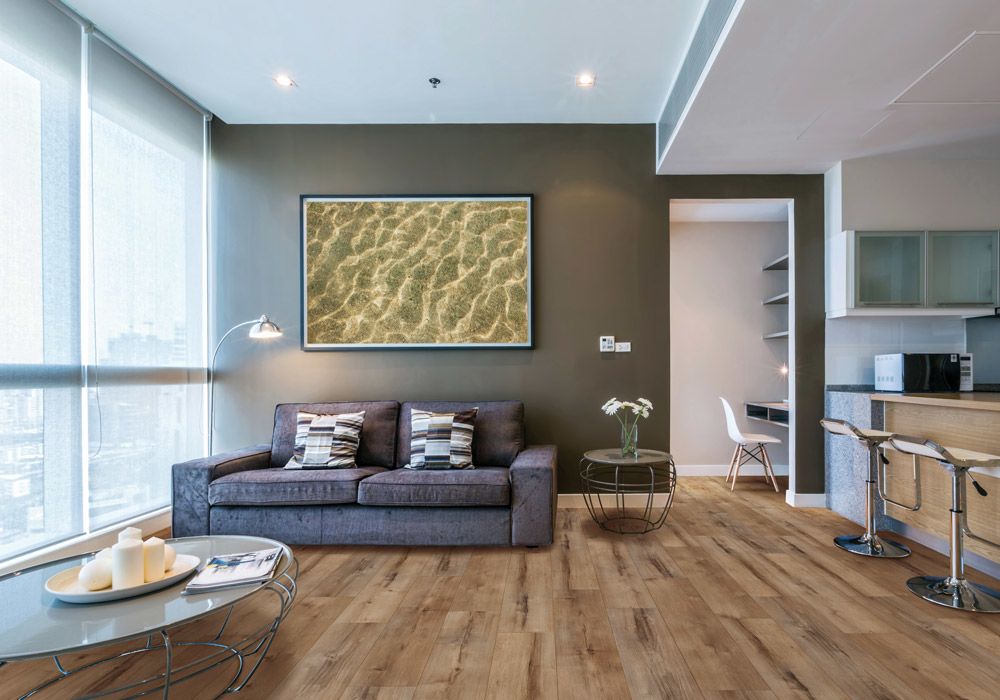
Choosing the right flooring color plays a major role in how bright and spacious a room feels. Flooring occupies a large visual area, and its tone influences how natural and artificial light moves through a space. When selected thoughtfully, the right flooring shade can transform even a dim room into one that appears open, airy, and inviting.
This guide explains how flooring color affects brightness and how to select the best option for different rooms and lighting conditions.
Why Flooring Color Influences Room Brightness
Flooring color affects how light reflects within a room. Lighter shades reflect more light, while darker tones absorb it. The balance between wall color, ceiling height, window placement, and flooring tone determines overall brightness.
Key effects include:
- Light flooring reflects sunlight across surfaces
- Neutral tones help distribute artificial lighting evenly
- Dark flooring can create contrast but may reduce perceived brightness
- Glossy finishes amplify illumination by bouncing light upward
Selecting the correct combination improves both visual comfort and spatial perception.
Best Flooring Colors for Brighter Spaces
Light Natural Wood Tones
Light wood flooring is one of the most effective ways to enhance brightness. Shades like oak, maple, and ash create a soft reflective surface without appearing artificial.
Benefits include:
- Enhances natural daylight flow
- Creates warmth without darkening the space
- Complements modern and traditional interiors
- Makes small rooms appear larger
These tones work especially well in living rooms, bedrooms, and open-plan areas.
Soft Neutral Shades
Neutral flooring colors such as beige, cream, and light gray help maintain brightness while offering flexibility in decor choices.
Advantages include:
- Reflect both warm and cool lighting effectively
- Pair easily with multiple wall colors
- Maintain brightness throughout the day
- Provide a clean and balanced appearance
Neutral tones are ideal for kitchens, hallways, and multifunctional spaces.
White and Off White Flooring
White and off-white floors maximize brightness more than any other shade. They reflect nearly all incoming light and create a spacious visual effect.
Best suited for:
- Small apartments
- Rooms with limited windows
- Minimalist interiors
- Contemporary layouts
Off-white options are often preferred because they hide dust and footprints better than pure white surfaces.
Pale Gray Flooring
Pale gray flooring offers a modern alternative to traditional light wood. It reflects light well while adding subtle sophistication.
Reasons to choose pale gray include:
- Works with cool-toned interiors
- Enhances artificial lighting
- Maintains brightness without appearing stark
- Complements modern furniture styles
This shade is especially popular in urban interiors and contemporary homes.
Flooring Finishes That Improve Light Reflection
Color alone does not determine brightness. Surface finish also plays a key role.
Consider these options:
Glossy finish
Reflects the most light and enhances illumination in dim spaces
Semi gloss finish
Balances brightness and practicality for everyday living areas
Matte finish
Offers subtle brightness while reducing glare in high-traffic rooms
Choosing the right finish ensures consistent lighting comfort throughout the space.
Matching Flooring Color with Room Size
Room size affects how flooring color performs visually.
For small rooms:
- Choose light wood or soft neutral shades
- Avoid dark brown flooring
- Use continuous flooring across adjacent areas
For large rooms:
- Combine light flooring with contrast accents
- Use pale gray or beige tones
- Maintain balance with wall colors
This strategy helps maintain visual harmony while maximizing brightness.
Coordinating Flooring with Wall and Ceiling Colors
Brightness improves when flooring complements surrounding surfaces.
Effective combinations include:
- Light flooring with white ceilings
- Beige flooring with pastel walls
- Pale gray flooring with soft blue accents
- Natural wood flooring with warm neutral paint
Avoid pairing dark flooring with dark walls in rooms lacking natural light.
Flooring Choices for Rooms with Limited Natural Light
Rooms without strong sunlight require strategic flooring selection.
Recommended choices:
- Off-white tiles
- Cream laminate flooring
- Light oak hardwood
- Pale gray vinyl flooring
These materials reflect artificial lighting effectively and prevent spaces from feeling enclosed.
Common Mistakes to Avoid When Choosing Brightening Flooring Colors
Avoid these errors when selecting flooring:
- Choosing very dark flooring in small rooms
- Ignoring finish type and light reflection
- Matching flooring too closely with wall color
- Overusing glossy surfaces in high-glare areas
- Selecting trendy shades without considering lighting conditions
Careful planning prevents costly redesign decisions later.
Practical Tips for Selecting the Right Shade
Follow these practical recommendations:
- Test flooring samples near windows
- Observe color appearance during different times of day
- Consider furniture color contrast
- Choose consistent flooring across connected rooms
- Evaluate maintenance requirements before final selection
These steps ensure long-term satisfaction with your flooring choice.
Frequently Asked Questions
Does light flooring always make a room look bigger
Light flooring typically increases the perception of space because it reflects more light and creates fewer visual boundaries.
Is glossy flooring better than matte flooring for brightness
Glossy flooring reflects more light, but matte finishes provide a balanced appearance with less glare in everyday living areas.
Which flooring color works best for north-facing rooms
Soft beige, light oak, and off-white flooring work well because they compensate for cooler natural light conditions.
Can dark flooring still be used in bright rooms
Yes, dark flooring works well in large rooms with strong natural light when balanced with lighter walls and ceilings.
What flooring colors hide dust better while staying bright
Off-white, light gray, and natural oak tones maintain brightness while reducing visible dust buildup.
Should flooring match wall color exactly
Matching flooring too closely with wall color reduces contrast and can make spaces appear flat instead of bright.
Is continuous flooring helpful for improving brightness
Using the same flooring across multiple connected rooms enhances light flow and creates a more open visual layout.